
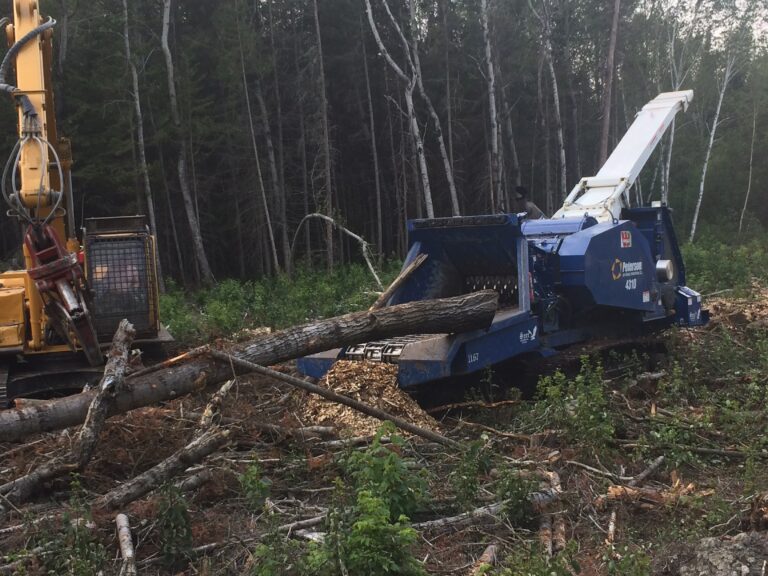
Chipping in the Logging Industry: Efficiency and Sustainability in Manitoba’s Forests
The logging industry is a vital component of Manitoba’s economy, contributing significantly to its industrial output and providing numerous jobs across the province. As global demands for sustainable forestry practices increase, technologies and methods that enhance efficiency and reduce environmental impacts are becoming crucial. One such method is wood chipping, a process that involves converting wood into smaller chips, which are easier to transport and can be used for various applications including biofuel, pulp, and paper production. This article explores the role of chipping in the logging industry, with a focus on its implementation in Manitoba.
The Process of Wood Chipping
Wood chipping is a method used to recycle and process fallen or felled trees. After trees are cut and delimbed, a machine called a wood chipper is used to cut the wood into small, uniform chips. These chips are then typically transported to mills where they are processed into paper, particle board, or biomass fuel. The efficiency of wood chipping allows for the entire tree to be used, reducing waste and increasing the sustainability of logging operations.
Types of Wood Chippers
There are several types of wood chippers used in the logging industry, each suited to different sizes and types of wood:
**Disc Chippers**: The most common type, featuring a large steel disc with blades attached. As the disc spins, wood fed into the machine is sliced into chips.
**Drum Chippers**: Utilize a large drum embedded with blades. Wood is chipped as it is pulled through the drum.
**Screw Chippers**: Employ a conical screw to draw the wood in and chip it against a fixed blade.
Each type of chipper has its own set of advantages and is chosen based on the specific requirements of the logging operation and the subsequent use of the wood chips.
The Importance of Chipping in Manitoba’s Logging Industry
Efficiency in Resource Utilization
One of the most significant benefits of wood chipping in Manitoba is the maximization of resource utilization. By converting whole trees into wood chips, virtually every part of the tree is used. This comprehensive use of biomass not only boosts the economic value derived from each tree but also aligns with sustainable forestry practices by minimizing waste.
Economic Benefits
Wood chips are a valuable commodity in the global market. They are used for a wide range of products from bioenergy to gardening mulch. In Manitoba, where forestry is a major economic activity, chipping not only adds value to the industry but also helps diversify the products that can be derived from logging, thereby enhancing the financial stability of the industry.
Environmental Impact
Chipping greatly contributes to the sustainability of logging by facilitating the production of biomass energy, which is considered a renewable source of energy. Biomass energy production using wood chips helps reduce dependence on fossil fuels, thus lowering carbon emissions. Moreover, efficient transport of wood chips compared to whole logs reduces fuel consumption and emissions from logging operations.
Challenges Faced in the Chipping Process
Despite its benefits, chipping is not without challenges. The initial investment in chipping machinery can be significant, posing a barrier for smaller operations. Additionally, the maintenance of these machines requires technical expertise and can be costly.
Furthermore, the demand for wood chips fluctuates based on market conditions, which can affect the profitability of chipping operations. Very few businesses in Manitoba invest in versatile equipment that can produce chips of various sizes for different markets, and they closely monitor market trends to adjust production accordingly.
Technological Advancements
The future of chipping in Manitoba’s logging industry looks promising with ongoing technological advancements. Innovations in chipper machinery, such as improved blade durability and fuel efficiency, are continuously enhancing the efficiency and environmental friendliness of chipping operations. Moreover, advancements in logistics, such as GPS and RFID tagging for chip loads, are improving the supply chain management of wood chips, making the process smoother and more cost-effective.
Conclusion
Wood chipping is an essential aspect of the modern logging industry in Manitoba, providing significant economic and environmental benefits. By efficiently converting felled trees into usable material, chipping not only ensures that the province’s logging practices are sustainable but also contributes to the broader economy by producing a versatile and marketable commodity. As the world continues to move towards greener solutions, the role of chipping in promoting sustainable forestry and renewable energy production is likely to grow, reinforcing Manitoba’s position in the global forestry industry.